Showing posts with label Hamby's Bay. Show all posts

Wednesday, February 17, 2016

Tiger Salamander Ambystoma Tigrinum

\


    The pattern of the Tiger Salamanders vary and can be spotted like the one we found but are usually striped like the name suggests. The base color is black and they have yellow markings. They have a short snout and can reach lengths of up to 14 inches making them the largest terrestrial salamander alive.

    You can find the Tiger Salamander over most of the continental USA, and you can find them burrowed in holes or underneath coverups like logs or metal sheets.


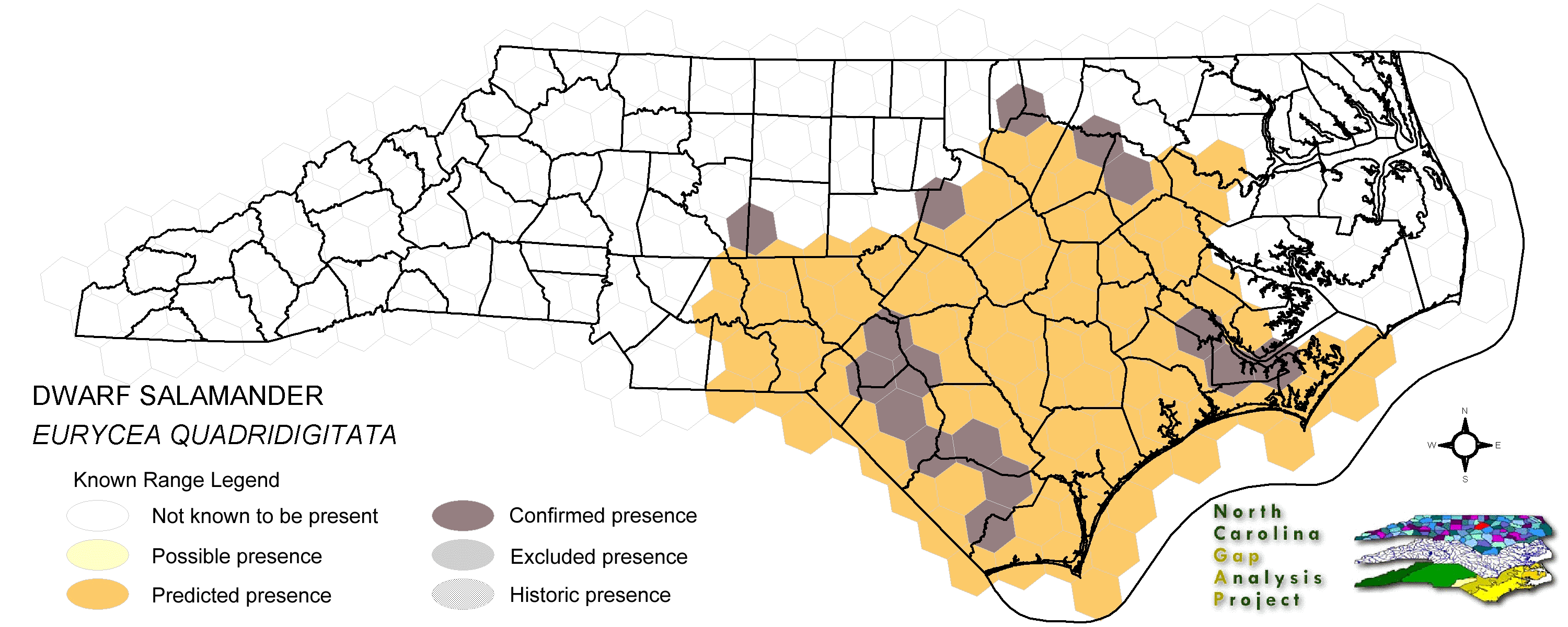
Dwarf Salamander Eurycea quadradigitata


    When we first caught one these guys, we misidentified it as a four toed salamander. As the name implies the Dwarf Salamander is very small in size and don't usually get any bigger than 3.5 inches. Apart from the small size you can identify them by their long slender bodies and tail. 

    The Dwarf Salamander is a rare species in North Carolina, which is why it is classified as species of concern. Their habitat in North Carolina spreads across most of the Coastal Plain, minus the northeastern corner. 


Spring Peeper (Pseudacris crucifer)


    The Spring Peeper, which is distinctively recognized by the X shaped marking on its back, is a member of the family hylidae which makes it a tree frog. These guys will call out in huge choruses and often drown out the sound of any other frogs calling and they start peeping right around the beginning of spring. 


 Spring Peeper Calling in Chorus

Mabee's Salamander (Ambystoma mabeei) 


    The Mabee's Salamander is an example of mole salamander, family Ambystomatidae. The adults are dark in color with small light colored splatters of color all over the topside of the animal. This species is not particularly common in this area so we were lucky to find it. The adults are mostly terrestrial but will usually remain near to a breeding area which usually takes the form of a vernal pool like where we found this or a pond.    

Wednesday, February 3, 2016

Atlantic Coast Slimy Salamander (Plethodon chlorobryonis)

    This species was found underneath one of the pre-setup coverboards probably using it for shelter and gather up some moisture. It may have also been looking for some food. The slimy's main diet consists of spiders, harvestmen, and other such small terrestrial arthropods.

    You can identify this species by its solid black colored body which is covered in several tiny white dots. Adults of this species can be anywhere from 4.5 inches or as long as 8 inches from head to tail. 

    The slimy is a member of the Plethodontidae family of salamanders, commonly known as the lungless salamanders. The slimy doesn't breath with gills either as it is a terrestrial species, they instead breath through their skin and membranes lining their mouths and throats.