Wednesday, February 17, 2016

Lab #5

Date: 2/17/16
Location: Lumber River Conservancy
Lab Activity: Searching for winter breeding salamanders at Hamby's Bay
Habitat: Vernal Pool
Temperature: 61 F
Wind: 3 mph
Humidity: 39%


Tiger Salamander Ambystoma Tigrinum

\


    The pattern of the Tiger Salamanders vary and can be spotted like the one we found but are usually striped like the name suggests. The base color is black and they have yellow markings. They have a short snout and can reach lengths of up to 14 inches making them the largest terrestrial salamander alive.

    You can find the Tiger Salamander over most of the continental USA, and you can find them burrowed in holes or underneath coverups like logs or metal sheets.


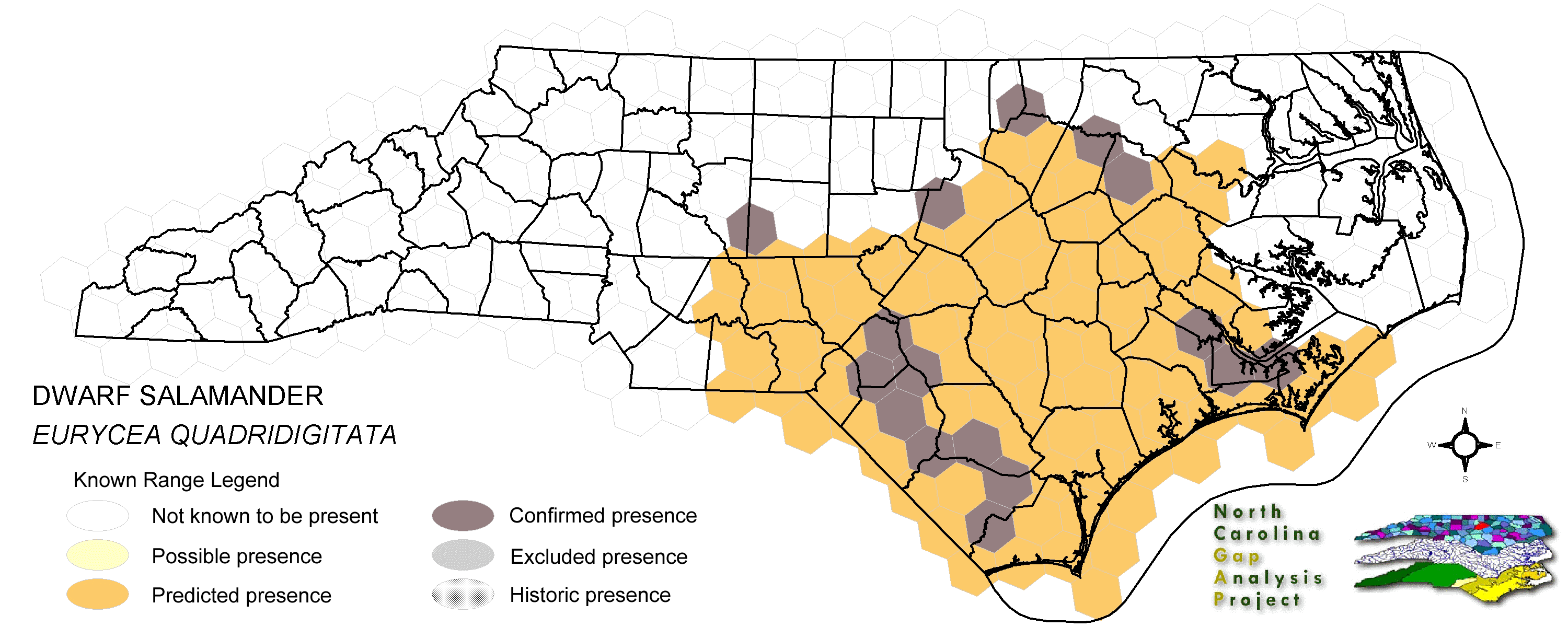
Dwarf Salamander Eurycea quadradigitata


    When we first caught one these guys, we misidentified it as a four toed salamander. As the name implies the Dwarf Salamander is very small in size and don't usually get any bigger than 3.5 inches. Apart from the small size you can identify them by their long slender bodies and tail. 

    The Dwarf Salamander is a rare species in North Carolina, which is why it is classified as species of concern. Their habitat in North Carolina spreads across most of the Coastal Plain, minus the northeastern corner. 


Spring Peeper (Pseudacris crucifer)


    The Spring Peeper, which is distinctively recognized by the X shaped marking on its back, is a member of the family hylidae which makes it a tree frog. These guys will call out in huge choruses and often drown out the sound of any other frogs calling and they start peeping right around the beginning of spring. 


 Spring Peeper Calling in Chorus

Mabee's Salamander (Ambystoma mabeei) 


    The Mabee's Salamander is an example of mole salamander, family Ambystomatidae. The adults are dark in color with small light colored splatters of color all over the topside of the animal. This species is not particularly common in this area so we were lucky to find it. The adults are mostly terrestrial but will usually remain near to a breeding area which usually takes the form of a vernal pool like where we found this or a pond.    

Southern Chorus Frog (Pseadacris nigrita)


We did not actually get to see this species but rather we only heard it in the background.

   The southern chorus frog has a call which can be best compared to a xylophone and can be heard singing during most parts of the day typically near shallow bodies of water. They breed from November to April throughout most of their range but have been known to breed year round in Florida.

   Its underside color varies from whitish gray to a more tan color and its back is marked with dark broken lines or spots. Most southern chorus frogs have a line starting at their eyes and running down their sides.


 Southern Chorus Frog Call


Wednesday, February 10, 2016

Lab #4

Date: 2/10/16
Location: Calloway Forest
Activity: Searching for Red Cockaded Woodpeckers
Habitat: Pine Forest
Temperature: 37.9 F
Wind: 10 mph
Humidity: 36%


Red Cockaded Woodpecker (Luconotopicus borealis)
 Male (note the red marking)

Female(no red marking)
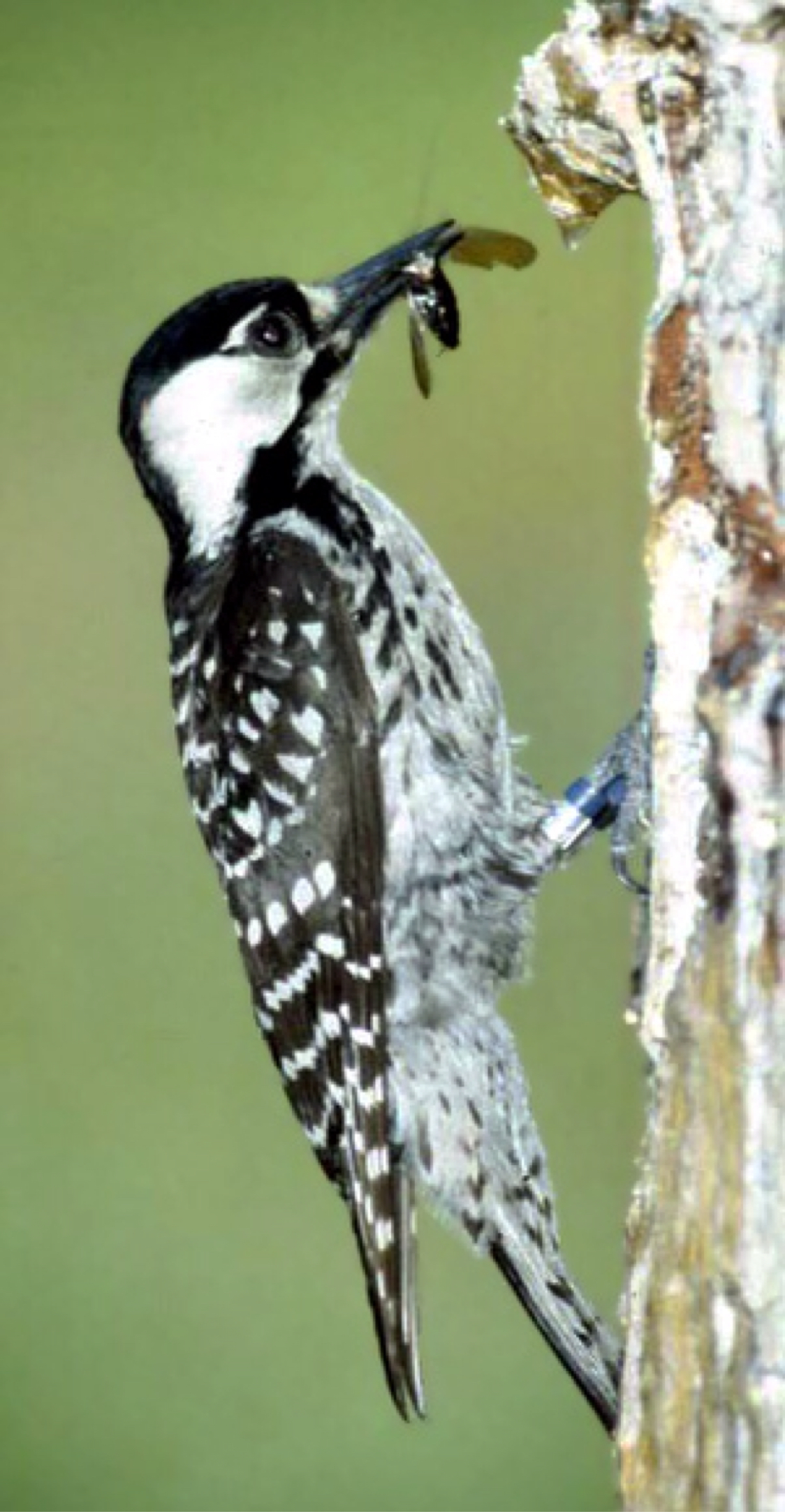
    For today's lab, the field zoology of spring 2016 headed out to Calloway Forest in search of the critically endangered Red Cockaded Woodpecker. Unfortunately none of us saw any woodpeckers of any kind. We did however see plenty of evidence that they are there in that forest.

    Red Cockaded Woodpeckers typically remain in families which are usually made up of 3 to 7 members. Most of these individuals are usually related to each other but sometimes can have a few members outside of the family called drifters. There may be one or two drifters present in the group and their purpose of being there is hope that the alpha breeding male dies so they can take his position. These drifters are males from other families that reached that certain age when it was time to move out. There are no female drifters because the girls don't often leave their original family.

    Red Cockaded Woodpeckers live inside of cavities which they themselves carve out using their beaks. They only carve cavities into living longleaf pine trees which have been infected with a fungus that softens the heart wood. The reasons why they are so picky is because these cavities can take up to a decade to carve out and doing it to a healthy tree would take even longer. Living trees are chosen because they will last longer, are less likely to catch fire, and will secrete resin. The woodpecker will peck at the tree to form holes through which resin can flow. The resin acts as a deterrent to keep predators away, namely snakes which find it near impossible to climb on.
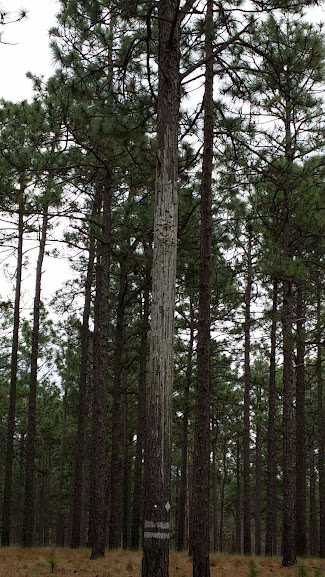
                                                      This is what a resin covered tree looks like.


    Humans have come up with ways to help the red cockaded woodpecker. The first way is quite obvious and that is by created forest refuges for them. Another way is by protecting the already made cavities with metal plates and by creating new ones. The function of putting plates around existing cavity entrances is to not allow other species to make the hole bigger so that they can use it. When we make new cavities for them, the way we do it is by carving out a big hole in the side of the tree and inserting a box.

 
                           Man made cavity